Save money on your electric bill
Grid-Tied Solar PV
Also compare our other power solutions:
What is a Grid-Tied Solar PV System?
When the grid is off, you are off
Grid-tied inverters will turn off and stop power flowing from your solar PV panels to the grid when the grid has no power. This is for safety reasons to protect electricians while doing line maintenance. Unfortunately, this also means that the electrical loads in your building will be off when the grid turns off.
If you would like your solar power to keep producing energy during load shedding, you will need to consider a battery-tied solar system with a hybrid inverter.
THIS SYSTEM PRIMARILY PROVIDES SAVINGS ON ELECTRICITY
Because this solution doesn’t include any batteries and the grid-tied inverter turns off during times of no grid power, this system doesn’t provide energy security but rather primarily provides a cost-effective way to save on your electricity bill, while also decreasing your building’s carbon footprint through the use of renewable energy.
"We have been delighted with the professionalism and competence of the AWPower team in all phases of our somewhat complex project with them. Their proposals were professional and technically excellent, their interface with us equally so and they have kept us abreast of all and any issues as they developed as well as being on-site when they said. We chose a company that was stable, reliable, has been in the market for a good time and could deliver what they said. We have not been disappointed."
Ian Cook Google ReviewCOMMERCIAL GRID-TIED SOLAR FOR BUSINESSES
The business case for grid-tied, roof mounted solar photovoltaic (PV) has become a no-brainer following the rapidly rising price of grid electricity, the falling price of solar system equipment and the introduction of tax incentives for businesses that may result in a 100% tax-deductible depreciation allowance in the first year of installation. The payback period of a commercial grid-tied solar PV system is low, around 4 to 6 years, thanks to the simple yet effective grid-tied inverter.
AWPower are trusted renewable energy installers to many businesses, offices, factories and establishments, providing energy services to help them save on electricity, safe-guard against future unpredictable tariff rises and lower their carbon footprints. As a solar company, AWPower focuses on quality, reliability and performance.
Why choose a Grid-Tied Solution
Main Benefits of Grid-Tied Systems
- Higher independence from future increasing electrical tariffs and monthly savings on electricity.
- Decrease your building’s carbon footprint by becoming a renewable energy user.
- Low payback period for commercial roof mounted solar PV systems.
- A cost effective solar PV solution.
Any questions?
Frequently Asked Questions
The energy output of your solar PV system depends on your roof’s space and orientation, as well as the local municipality’s generation limits for your property.
No, your photovoltaic panels will not power your building if the grid turns off during the day. This is because of the choice of the grid-tied inverter. It is a cost-effective and simple product that works well to give you savings on your electric bill, but you won’t have power during load shedding. If you would like energy security we will need to add batteries. You have the option to either add separate, modular battery backup (link to page) systems with your grid-tied solar PV system, or to install a battery-tied solar system (link to page) with a hybrid inverter.
But don’t worry, you don’t need to make the decision yourself about which solution is right for you. AWPower’s services include designing systems that are custom-tailored to each individual’s needs – whether its commercial or residential – while making the whole process as simple as possible for you.
Click here if you would like to learn more about the differences in solar panels.
Municipalities differ in their ability to let you sell excess solar energy back to the grid. For the best savings, it’s better to maximise your use of available solar power rather than exporting it. Based on our experience as solar PV installers, we haven’t found any municipality that buys back solar power at the same rate they sell it. Typically, they pay less, meaning lower savings if you export instead of using the solar power yourself.
To increase self-consumption, we suggest adding battery storage to your system. This way, excess solar power is stored during the day and can be used in the evening and at night.
Having the option to export to the grid can still be beneficial. When your batteries are full, exporting excess solar power is the next best option to make full use of your solar PV system. To export, you’ll need a special meter from the municipality. In Cape Town, commercial businesses can apply to have this meter installed for free by the city.
The component of the system that reduces the payback period of the installation is the solar photovoltaic panels, as these are what produce electricity and generate savings. The more PV panels you install, the lower the payback period will be. Batteries have a large capital expense and although they provide energy security during times of load shedding, they do not produce savings directly. Adding batteries to your system will increase the time it takes for the system to pay back its initial investment.
Installing your solar PV system in a modular way can make adding battery capacity more affordable. Because of the modular nature of these systems, you can add solar first and batteries at a later date or vice versa.
If you would like to get an estimated cost for a solar installation with projected monthly savings, use our solar calculator here.
The solution for generator integration is a little tricky for this type of system, but it is possible. The generator power needs to be at least the same size or larger than the solar system. We usually only look at generator integration for commercial systems of 100kW and above.
Their final presentation to the Pinewood stakeholders was of an exceptionally high standard. Their workmanship, supervision of workers and the administration are of equally high standards. I will definitely recommend them to any prospective client.
Get in touch
Is this the right solution for you?
Whether you’ve made a final decision or not, please feel free to contact us for further information, advice or to arrange a consultation.
The big question...
How much will a solar PV or battery backup system cost me?
Whilst prices may vary slightly for different scenarios, we have put together sets of standard pre-priced solution estimates that will give you an idea of what sort of investment you can expect. Simply click the relevant button below to find out more depending on whether you want a solar PV system (system charged by solar panels) or a battery backup system (system charged by the grid):
Media
As featured In:


Related Posts
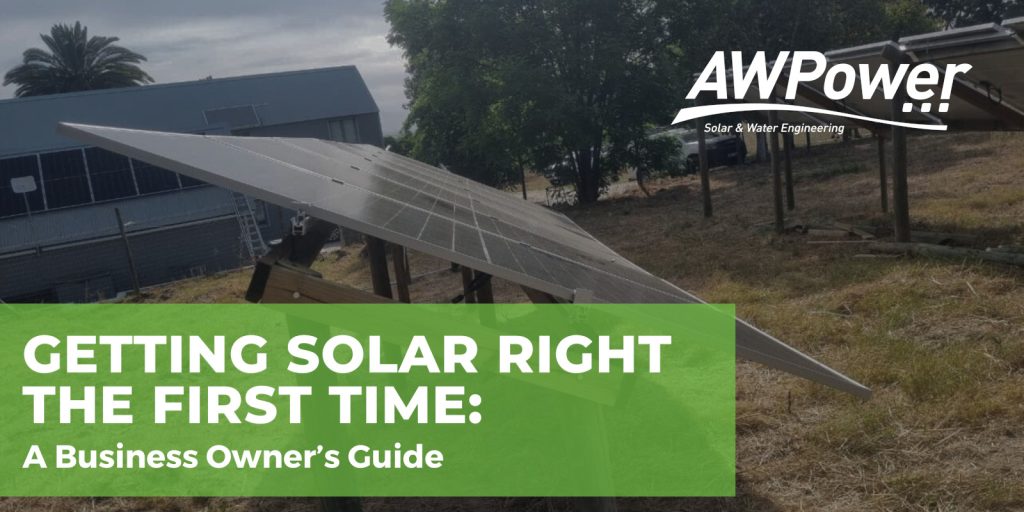
Solar is a business strategy and the outcome depends heavily on how well that strategy is thought-through upfront. Find out more here…
There is a monumental difference in the price you would pay for a solar power system capable of providing around 95% of your electricity usage compared to one that can achieve 100%.
AWPower’s managing director, Christiaan Hattingh, told MyBroadband in an interview that, for most households, he would strongly advise against an entirely off-grid solar energy system without Eskom as a backup.
Cape of Good Hope SPCA, the founding society of the SPCA movement in South Africa and the oldest animal welfare organisation in the country, has chosen AWPower to implement a grid-tied solar solution, with additional modular battery backup systems to support essential loads.