
South African businesses have become experts at counting kilowatt-hours when it comes to lighting, heating, and running equipment, but there’s one area where energy costs are often overlooked: water pumping.
Whether you’re running a farm, managing an eco-estate, or maintaining a municipal water system, moving water takes serious power. Traditionally, that’s meant reliance on solar drives, diesel generators or high grid usage. But there’s a quieter revolution underway, and it’s solar pumping inverters with cloud-based monitoring & control.
Here’s how solar pump inverters are helping estates and agricultural operations turn their water systems from energy hogs into cost-saving assets.
Lake Michelle: Leading the Charge in Solar-Powered Water Management
Take the case of Lake Michelle Eco Estate in Noordhoek, Cape Town. After implementing a solar-powered pump station for sewage and water management, they began saving approximately R5 500 per month per pump station, and there are 6 pump stations on the estate.
These savings are recurring and scalable across estates, farms, and even small towns.
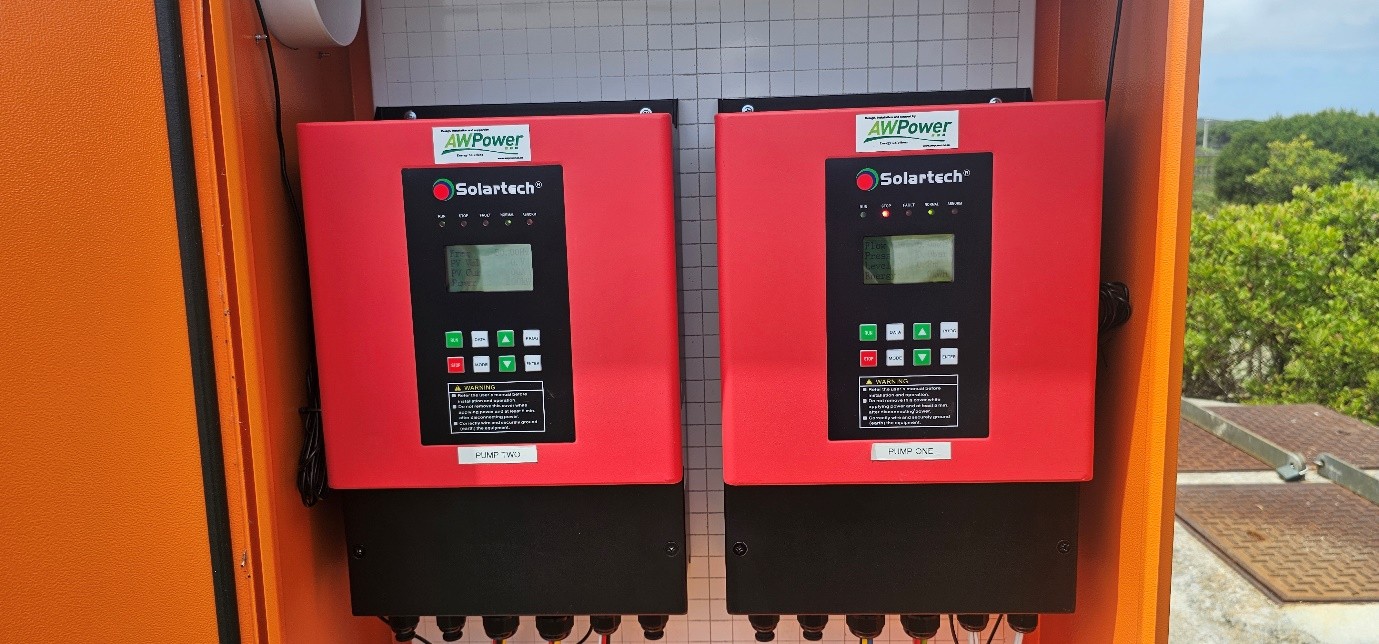
At the heart of the transformation? Smart solar pumping inverters from Solartech – distributed and supported by AWPower.
Why Water Pumps Drain Energy (and Budgets)
Water pumps, particularly for boreholes, sewage systems, or irrigation, tend to run on large motors that consume electricity in bursts, often during peak hours. On farms, diesel generators are commonly used, which brings with it:
- High and volatile fuel costs
- Ongoing maintenance and refuelling needs
- Noise and emissions
Solar-powered systems, on the other hand, offer a more sustainable and predictable cost profile.
How the Tech Works
AWPower supplies Solartech inverters that connect solar PV arrays directly to pump motors. These aren’t just “on/off” switches; they’re intelligent devices that:
- Monitor pump health
- Trigger maintenance alerts
- Track system performance remotely via the cloud
- Allow for custom programming of pressure, flow, and timing
This is water management with a brain. The result? Lower operating costs, higher reliability, and less human intervention.
IoT Monitoring = Full Visibility, Full Control
The beauty of smart solar pumping systems is in what they save and also what they enable.
Thanks to cloud-based dashboards, managers and technicians can:
- View pump status in real-time
- Get alerts for pumps not running, exceeding upper- or lower liquid levels, over-temperature or blocked intakes
- Remotely adjust operation times
- Track water usage and efficiency
This opens doors to data-driven maintenance, water usage auditing, and even potential revenue streams if estates charge based on actual consumption.
Calling All Installers: This is Your Opportunity
AWPower is actively looking for solar pumping inverter installers, electricians, and plumbing specialists across South Africa to join our growing installer network.
Why it’s worth your time:
- Growing demand in agriculture and estate management
- High-value projects and repeat business
- Technical support and training from AWPower
Whether you’re in the Western Cape or working in remote rural areas, solar pumping systems are a fast-growing part of South Africa’s energy and water strategy. Get in touch: info@awpower.co.za
In Summary
Water doesn’t just flow, it costs. And for farms, estates, and municipalities managing pumps with grid or diesel energy, those costs are rising.
Solar-powered pumping, driven by smart pumping inverters like those from Solartech, offer a practical and profitable alternative. Add cloud-based monitoring and automation, and you’ve got a tool that improves water security and saves real money.
If you’re a property manager, a farmer, or an installer looking to offer smarter solutions, let’s talk.
Contact AWPower today and explore how solar pumping can turn water management into a profit centre.